This post may contain affiliate links that at no additional cost to you, we may earn a small commission. Read the Disclosure Policy for more information.
Last Updated on March 2, 2026 by Katie
Your car fails its MOT, the boiler coughs its last breath, or your hours get cut with one short phone call.
Suddenly, your bank balance feels like thin ice. Most of the stress isn’t the bill itself; it’s the scramble to cover it without falling behind on rent, food, or energy.
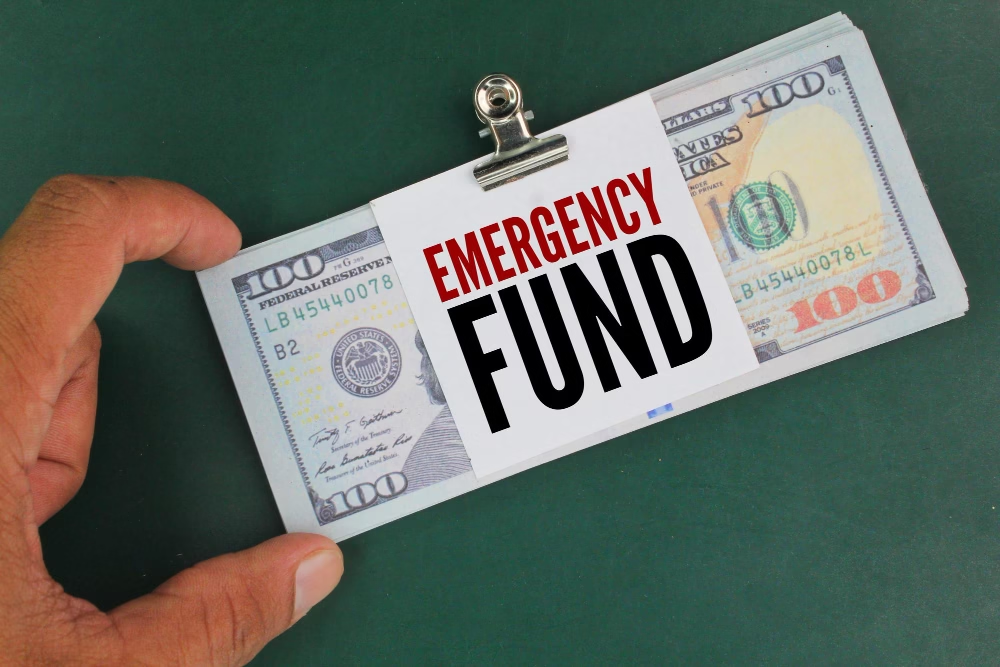
That’s what an emergency fund is for. It’s cash you set aside for life’s surprises, so you don’t have to reach for credit cards, overdrafts, or “I’ll figure it out later” plans.
If you’ve tried saving before and it never sticks, you’re not broken. You just need a system that works when money is tight.
This guide on how to build an emergency fund starts small, with a starter target of £1,000, then grows towards 3 to 6 months of your basic costs.
One step at a time, you can build a cushion that makes bad weeks feel less scary.
Want to Make Extra Money Right Now?
- Survey Junkie: Earn money by taking surveys and giving your opinion on new products. Over $1.5 million is paid out to members monthly! Join Survey Junkie now.
- American Consumer Opinion: Get paid for your opinion by taking surveys and participating in research studies. Earn between $1 and $50 per survey. Join ACOP Now.
Related reading:
- 43 frugal living tips to save huge
- 15 hacks to improve your relationship with money
- How to stop living paycheck to paycheck
What Is An Emergency Fund, and What Counts As a Real Emergency?
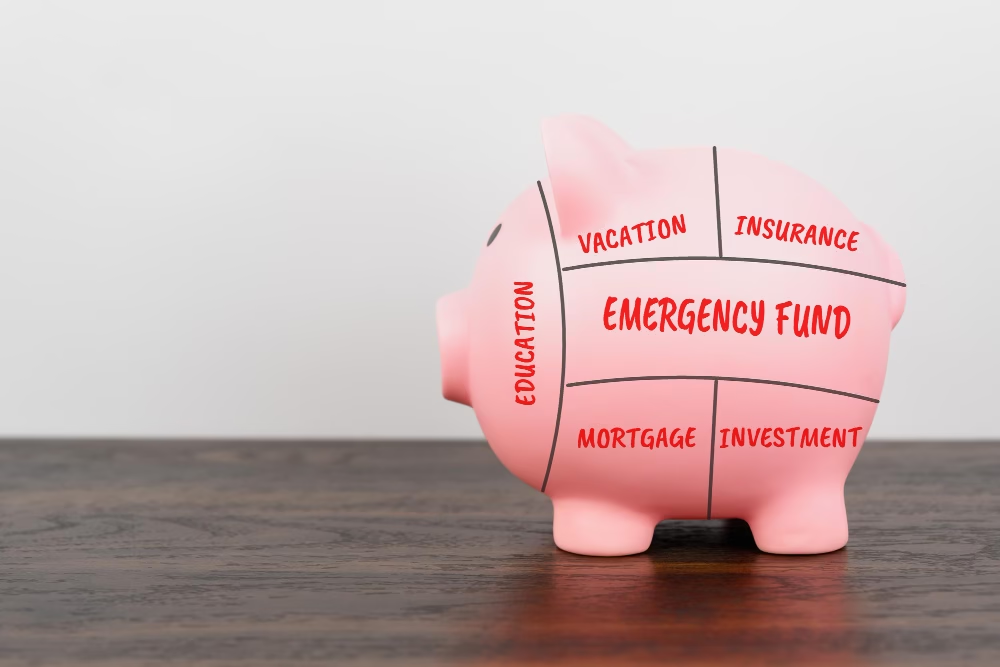
An emergency fund is easy-to-access cash you keep for unexpected costs or a sudden drop in income.
It’s a safety net, not an investment plan. The goal is speed and stability, so keep it somewhere low-risk, like a separate savings account you can reach quickly.
It’s also not a “treat fund”. Holidays, a new phone, and planned gifts don’t count because you can see those coming. Emergencies are the things that show up uninvited.
A simple way to think about it is this: an emergency fund is a fire extinguisher. You don’t buy one because you’re excited to use it.
You buy one so a small fire doesn’t turn into a disaster.
Here’s a quick example that makes the difference clear:
- Real emergency: Your fridge breaks and you need a replacement so you can store food safely.
- Want: You upgrade your fridge because you’ve seen a nicer one online.
Learning how to build an emergency fund gets easier once you draw that line and protect it.
Good reasons to use it (and the few times you shouldn’t)
Most emergencies fit a familiar pattern. They’re urgent, necessary, and unexpected.
Common “yes, use it” situations include:
- Job loss or reduced hours
- Urgent travel for a family situation
- Medical costs you can’t delay
- Car repairs that keep you working
- Home repairs that stop damage getting worse
- Rent or mortgage gaps after a shock
- Essential appliance replacement (cooker, washing machine)
Use a quick pause-and-check rule: Is it urgent, necessary, and unexpected? If the answer is yes to all three, it qualifies.
One behaviour matters more than any spreadsheet: don’t touch the fund unless it’s an emergency.
That boundary is what turns a savings pot into real security.
Why An Emergency Fund Matters When Life Gets Expensive
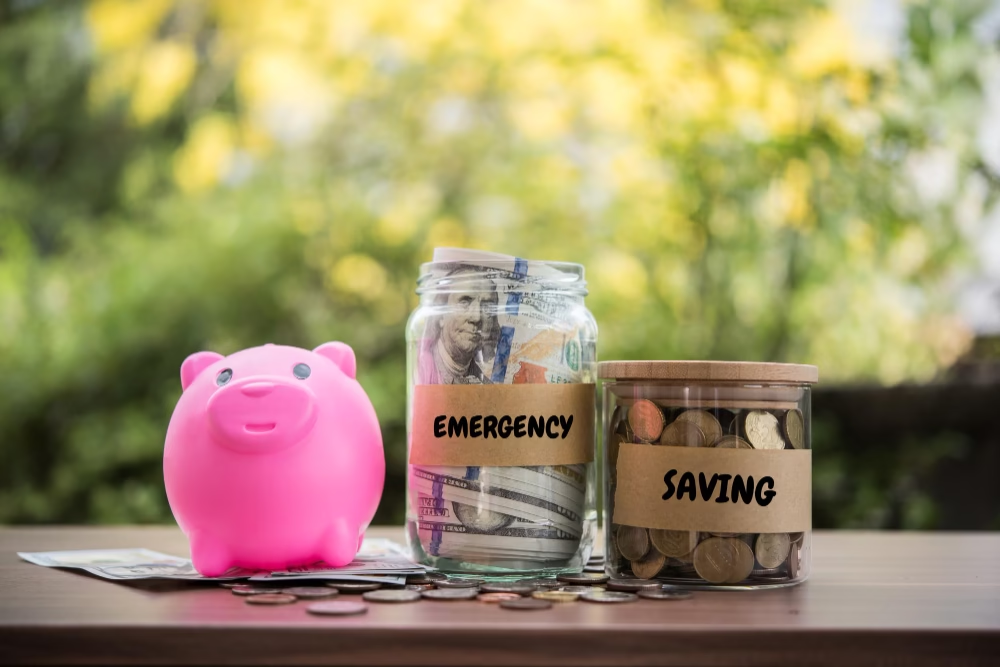
When prices rise, there’s less slack in most budgets.
A single surprise can push you into late fees, missed bills, and that sick feeling in your stomach when you open your banking app.
An emergency fund doesn’t stop bad luck, but it stops bad luck from charging interest.
Personal savings remain your first line of defence, because they give you choices. You can pay the bill today, keep the lights on, and avoid borrowing from tomorrow.
Thinkmoney’s 2026 overview of building an emergency fund in 2026 also highlights the same core point: the fund helps you avoid debt when life throws a surprise.
Use how to build an emergency fund as your north star, because the payoff is real: fewer late fees, fewer overdraft charges, and fewer nights lying awake doing mental maths.
The benefits you’ll feel straight away, even before you hit £1,000
You don’t need a perfect fund to feel relief. Even small milestones change your week.
At £100, you can handle a sudden prescription, a school cost, or a small repair without panic.
At £250, you can absorb a nasty bill without juggling direct debits. At £500, you’ve got breathing room.
The wins are practical, but they’re also emotional. You stop feeling trapped in “all-or-nothing” moments.
Celebrate those milestones on purpose.
Not with a shopping spree, but with a simple reward: a favourite film, a long walk somewhere lovely, a free library borrow, a note on your phone that says, “I’m doing it.” Momentum is fuel.
How to Calculate Your Emergency Fund, and How Much You Should Aim For
A big savings target can feel like staring up at a cliff. So don’t start there. First, measure your basics, then build from the ground up.
Here’s a simple method you can do in 15 minutes:
- List your must-pay monthly costs: rent or mortgage, utilities, food, transport, insurance, essential childcare, minimum debt payments, and healthcare basics.
- Add them up to get your monthly “keep life running” number.
- Multiply by 3 for a starter full emergency fund, then multiply by 6 for a stronger buffer.
This is where personal context matters. Choose 3 months if your job feels stable, your household is smaller, or your costs are flexible.
Choose 6 months if income varies (freelance, shifts, self-employed), if you support others, or if health needs make costs less predictable.
Inflation and life changes also move the goalposts. Review your number once a year, or whenever you move home, change jobs, or add a new regular bill.
Think of building an emergency fund as a process, not a one-time task. The fund grows as your life changes.
A quick example you can copy with your own numbers
Here’s a round-number example to make it concrete:
| Monthly basics | 3 months | 6 months |
|---|---|---|
| £1,600 | £4,800 | £9,600 |
If £4,800 looks impossible today, that’s normal.
Start with £1,000 as your first buffer. It won’t cover everything, but it can stop a small crisis from becoming a debt spiral.
Related reading: How to save $1,000 in a month on a low income.
Then you build towards the bigger number over time.
10 Steps to Save Your First £1,000 Emergency Fund (Even if Money is Tight)

This section is the heart of how to build an emergency fund when you’re living close to the line.
Each step is small on purpose. Small steps are repeatable, and repeatable beats heroic.
Step 1: Pick a clear starter goal, then give it a deadline
Make the goal specific: “£1,000 by 30 Nov” is clearer than “save more”. If £1,000 feels too far, choose £250 first, then £500, then £1,000.
Write it where you’ll see it. A note in your wallet. A lock-screen reminder.
A sticky note on the kettle. Your brain needs frequent cues, especially on tired days.
Step 2: Make a simple budget that gives savings a job
Budgeting isn’t punishment. It’s deciding where your money goes before it disappears in bits.
Start with a small fixed amount you can protect, even £5 to £25 a week, then raise it later.
If you’ve never budgeted before, this guide on budgeting tips for beginners can help you set something up without getting overwhelmed.
Send that small amount to savings first, because surprises don’t wait for the end of the month.
Step 3: Open a separate savings account so you’re not tempted
Keep your emergency fund separate from daily spending.
An online savings account often works well, because it’s quick to access, but not sitting next to your debit card balance.
Interest is a nice bonus, but safety and access matter more.
A practical trick is to rename the account in your banking app to “Emergency Fund” so it’s harder to justify dipping in.
Further reading: How to save money on a low income.
Step 4: Automate it, because willpower gets tired
Set an automatic transfer for the day after payday. Even £5 weekly counts. The point is consistency, not a perfect number.
If the transfer fails one month, lower the amount and keep going.
Don’t quit. Automation turns saving into a background habit, like brushing your teeth.
This is a key part of how to build an emergency fund without needing constant motivation.
Step 5: Cut one ‘leak’ you won’t miss, and send the difference to savings
Choose one change you can live with.
Cancel a subscription you forgot about. Swap one takeaway for a quick supermarket dinner. Cap your coffee spend for weekdays.
Then move the saved money straight into your fund. One change at a time sticks better than a full lifestyle overhaul.
Further reading: 13 things to stop buying to save thousands.

Step 6: Lower grocery costs with a plan before you shop
Groceries can swing wildly without a plan. Check the fridge first, then plan a simple week around what you already have.
Shop with a list, and keep meals boring on purpose for a while.
Even a small grocery trim can free up cash fast. That spare £10 each week becomes £40 a month, which becomes progress you can see.
Learn more in this guide on how to save money on groceries while still eating well.
Step 7: Put cashback and small wins straight into your fund
Treat cashback, bank rewards, and refunded purchases like found money. It’s not “spending money”. It’s “patch the safety net” money.
Set a monthly reminder to move those small wins into savings.
The amounts may look tiny, but tiny is how most emergency funds are built.
Step 8: Try a ‘sell one thing a week’ sprint for quick momentum
Look around your home with fresh eyes. Old shoes, unused tech, kids’ toys, furniture you don’t love anymore.
Sell one item a week on local marketplaces, then transfer the money immediately.
If you’re short on items, team up with a friend or neighbour for a car boot sale. The goal is speed and momentum, not perfection.
Further reading: 20 best sites to sell used clothes online.
Step 9: Add a simple side income stream, even if it’s just a few hours
A few extra hours can change the timeline for your first £1,000.
Try tutoring, virtual assistant work, delivery driving, selling handmade items, or paid surveys (check these top online side jobs for beginners).
Keep it safe and legitimate. Also, protect your rest, because burnout can cost more than it earns.
Pick one small option you can sustain for a month, then reassess.
This is another practical piece of how to build an emergency fund when the budget is already tight.
Step 10: Use windfalls on purpose, then review every 90 days
Windfalls are anything that isn’t part of your usual income: a tax refund, a bonus, a pay rise, or gift money.
Decide in advance that at least part of it goes to the fund, or all of it if you can manage.
Every 90 days, do a quick check-in. If things feel stable, nudge your automated transfer up a little. If money is tight, keep it steady and protect the habit.
If you like structure, a short savings sprint can help you stay motivated.
These money saving challenges can add a clear plan without making saving feel like guesswork.

Final Thoughts On How to Build an Emergency Fund
A strong emergency fund isn’t built in one brave weekend.
It’s built in small, stubborn moves. Start with a separate account, automate a small amount, cut one leak, and funnel extra money from sales or side work into the pot.
Most importantly, protect it, and only use it for true emergencies.
If you’ve been wondering how to build an emergency fund when saving feels impossible, start today with one small deposit, even £5.
Then choose one step to do this week, and one step for next week. Your future self will feel the difference the next time life tries to wobble your finances.
If you’re still finding it hard to save, check this guide on simple ways to cut monthly expenses.